How To Deal With A Crisis In Team Morale
Being a project manager has a wide range of technical skills- project management software skills, workload management and more, but how about the emotional management side of things? Morale in a team can suffer for many different reasons. There are big, obvious causes like missing a key milestone and feeling defeated as a result, or sudden changes in scope and workload which can be very off putting. On the other hand, there are slower, more gradual morale killers such as poor work/life balances or a lack of team recognition. As project manager, it’s important to be in touch with your team and how they’re doing. Are there any signs people are struggling? Take a look at your Jira or Trello boards- are smaller tasks taking longer than usual? Has anything been sitting overdue for a while? Being vigilant about these signs of burnout and stress is an extremely overlooked part of the role- how do you expect to get the best results out of your team when they’re running themselves into the ground?
As a leader, your mindset matters, because how you respond to adversity can impact your team’s response too. However, this isn’t me just saying “don’t panic because then your team will panic!”.
Whilst that is true, there is so much more to how to handle crises in team morale, and it all starts with showing up when things are at their hardest. Not just showing up to the office, but actually showing up for your team- make sure they know you’re available. Consistent reassurance that you’re around for people to talk to, ready in case of any emergencies and actually present and working on things can make you seem much more reliable and trustworthy. Now you’ve shown up, how do you actually work towards improving team morale?
Empathy
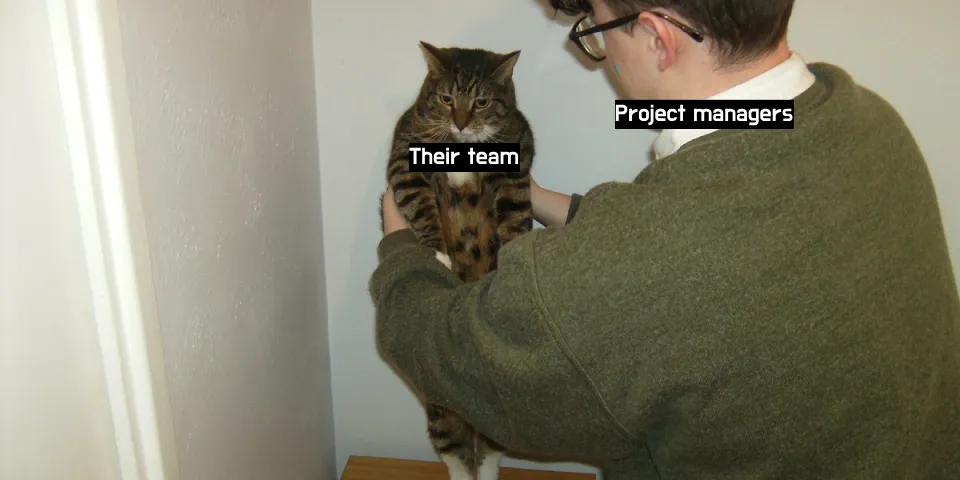
Your first priority should be empathy and humanising your team. Let’s say you’ve missed a super important milestone and everyone’s feeling it. The people in charge of you are concerned about budget, hitting the next milestone and how quickly you can get back on track. Unfortunately, it is pretty common for people to point fingers at the project manager when things get ugly, which is why I want to highlight the importance of empathy. Not everyone can fully grasp the complexity of game dev, so they can’t be empathetic- they just want the job done. But, you do. You understand how incredible it is that modellers create masterpieces from a cube, that programmers can create complex systems from nothing or that level designers bring life to empty rooms.
Rather than passing that pressure down, try to be more patient since the stress of the situation is naturally going to impact your developers, anyway. They might even be slower than before, less focused or easily distracted as a result. It’s time to start having more 1:1’s with your team, recognising them all as unique humans with different styles of communication and mechanisms for coping with difficult situations, rather than robots making this game. Asking personal questions such as “Is anything worrying you? What in particular?” or “What can I do to support you?” can help you deal with the next part of morale crises management.
Communication
Now that you understand your team a little better, it’s going to be a lot easier to find out what your team wants from you and the best way you can support them through this. “Have good communication” sounds obvious, but what does effective communication look like? Effective communication means having an established avenue of two-way conversation with your team. An example of this would be regular team check-ins or ‘open-door conversations’. In my opinion, you can’t ever have too much communication and it ties into what I said near the start of the article- it’s about letting your team know that you’re always there to support them.
However, this does mean that you’re going to have to tell your team the bad things too. It’s not worth hiding issues from your team, because it could get worse over time and leave you having to justify why you didn’t address it sooner. Lead by example and share in the burden that you face, because once you push this game over the finish line, it will all be worth it. And if there are no updates to the situation- that’s worth communicating too! Simply saying that there’s no real updates is still an update on whatever might be happening.
Optimism
The idea of cultivating optimism is more about future proofing your team’s morale and creating an environment they can be happy in. At the start of projects, everyone’s excited- a brand new adventure, new challenges await them and there’s plenty of optimism. But as projects progress, this feeling naturally tends to dim as people just get on with what they have to do. Celebrating small wins is one of the easiest ways to help your team stay interested and actually engaged with the project, rather than just getting it done for their paycheck. It shows the effects of their efforts in real time compared to, for example, waiting until the game’s release. Even though it’s not worth anything in a material sense, being employee of the week just feels good and that’s what morale is all about.
The second cornerstone of optimism is having a strong sense of purpose. “When we work with purpose or live with purpose, we feel more fulfilled and better equipped to see the glass half full,” says Leah Weiss, a Stanford professor specializing in mindfulness in the workplace. Having this sense of purpose can help overcome challenges because you actually have a reason to do so, other than because you “have to”. As project manager, helping your team think more optimistically is a great way to get the best from them. You can read more from Leah Weiss about how to find your own sense of purpose and, subsequently, help others find theirs in this article she wrote. It also features a talk on how to grow compassion, which ties into what I spoke about earlier.
Mindfulness
Another great way to cultivate workplace optimism is making time for mindfulness. It’s worth mentioning that mindfulness is more of a personal thing, but making sure your team is equipped to deal with workplace-related stress is vital. This can come in many different forms, such as simple breathing exercises or focusing on single-tasking (rather than multi-tasking) when you’re feeling burnt out. My personal favourite is ‘mindful commuting’. Simply put, it’s about commuting to or from work without any distractions and just existing- focusing on your breathing, taking in your surroundings and unwinding, whether to let you focus better when you get into work or leave the work day behind you. You can do this even if you work from home, by splitting up your day with short walks.
A great example of workplace mindfulness can be found in Portsmouth, where Waffle Studios is located. I spoke to Jay, a junior game developer, about their weekly mindfulness activities.
“Can you explain what your weekly activity actually is?”
“Every Tuesday at 11am everyone gets together in the office to spend an hour doing a fun activity. There’s usually a bunch of differing things you can do like lego, a puzzle, a board game or my favourite- crocheting. You can do something with someone else or on your own.
“How does this hour affect your week?”
“It’s my favourite part of the week! I find it very helpful because it’s an opportunity to socialise with my coworkers and it puts me in a good mood for the rest of the week. I usually feel very energised and productive for the rest of that day as well”
I’ve met the people from Waffle Studios several times, since submitting a winning entry alongside Jay in Hack Pompey’s hackathon back in March of this year. They’re a really friendly bunch who make awesome daily web games, including one of my favorites- Lettergrams!
Closing thoughts
I hope after reading this you feel better equipped to not only lift your team out of a morale crisis, but potentiallyavoid one entirely. There are some reasons for low morale that you can’t always solve, though. Things that are decided higher up, like the pay your team is receiving, or personal issues your team are facing might be out of your reach, but I would argue it’s still matters that you try, since trying in itself can make people feel better when morale is low.
The final and most important piece of advice is to remember that you can’t pour from an empty cup. Prioritise your own well-being because it’s essential for your team’s success.
Thank you for reading, and thanks to Jay for contributing to this article! Feel free to reach out through Linked In or email me at nazimchoudry786gmail.com.